The AI trap: why smart tools are not financial advisers
Because AI sounds so helpful, it is easy to lean on it too much. A clear look at the limits, with a checklist for staying in control.
Educational, clear about risk, and not investment advice.
Created in collaboration with a partner. Investing involves risk.
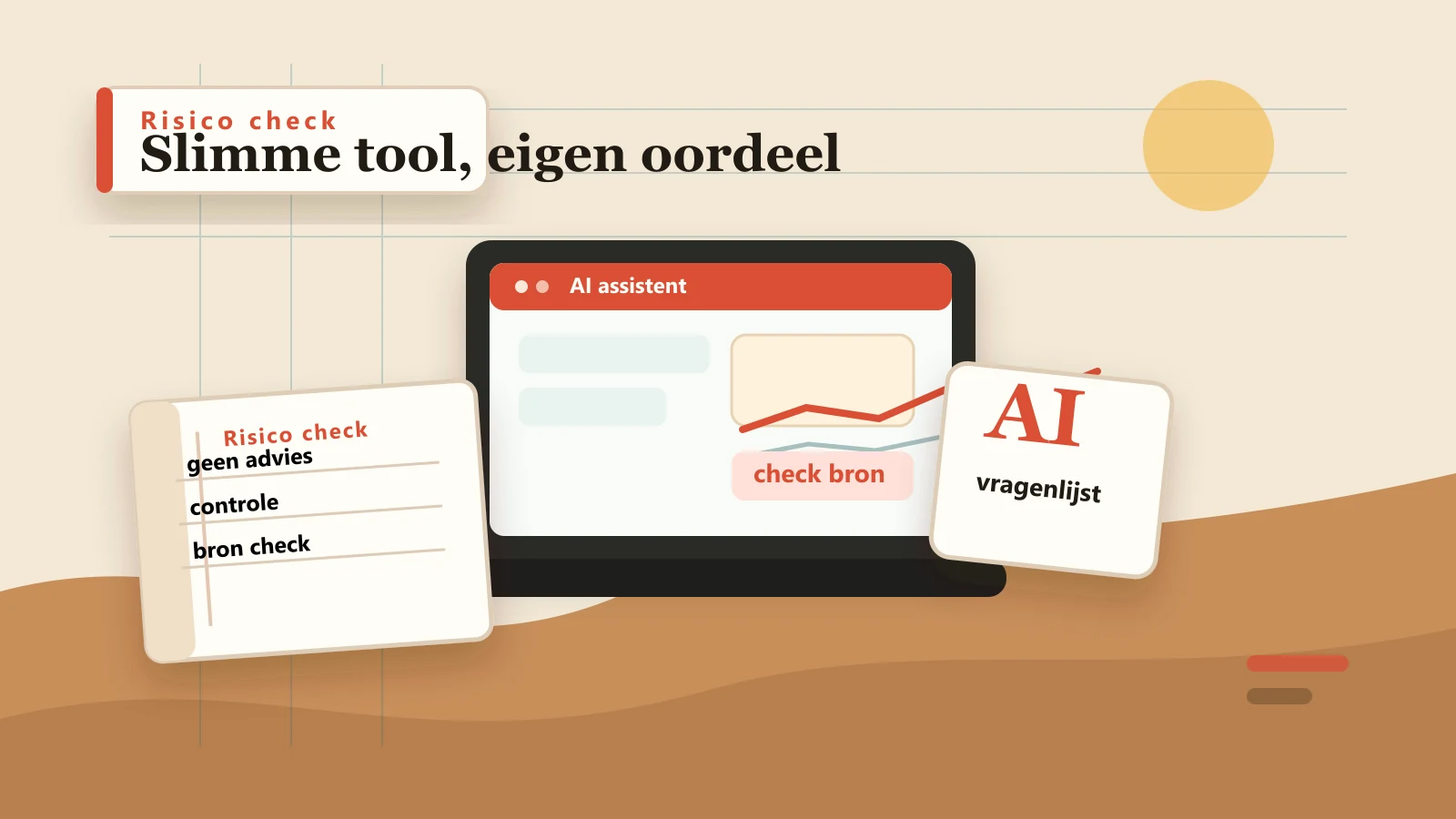
Transparent starting point
Understand first, then decide whether a starting conversation makes sense.
Read
4 min calm frame
Check
2-minute profile questions
Guide
Unlocked after your request
Here is something many people notice too late: the most dangerous thing about AI is not that it can be wrong. It is that it can be wrong with confidence. An AI answer arrives smoothly, politely, and decisively, the exact tone we often associate with expertise.
That tone can mislead us.
This article is deliberately the opposite of a sales pitch. In this series, we show how useful AI can be for learning about investing. A fair explanation also has to show the other side. The more useful the tool, the more important it is to know where it can mislead you, especially when money is involved.
The core point: AI is a tool, not an adviser
A financial adviser knows your situation, carries responsibility, and is bound by rules. AI is none of those things. It is a text system that generates plausible answers from patterns. It can often explain something well, but it does not know who you are, it carries no responsibility, and it cannot judge what a mistake would cost you.
Once that is clear, the rest falls into place. AI is your study partner, not your adviser. A study partner should be checked.
“The most dangerous thing about AI is not that it can be wrong. It is that it can be wrong with confidence.”
Four traps to recognize
1. Hallucinations. AI can invent information: a number, a "fact," even a source that does not exist. It may look real, but it is not. With financial information, that is a serious risk.
2. Outdated information. Many models are trained up to a certain point and may not know recent developments. In a daily-moving subject like markets, that can make an answer stale without making it sound stale.
3. Bias. AI learns from existing text, including the one-sided assumptions inside it. It can present an assumption as a fact or echo a popular view as if it were objective truth.
4. Overconfidence. This is the subtle one. AI rarely says "I am not sure" in the same way a careful expert might. It can present a weak answer with a strong voice, and people often confuse certainty of tone with accuracy of content.
"It sounds certain" is not "it is correct"
Keep that sentence close. It is the compass for responsible AI use.
The confidence of an answer tells you almost nothing about its accuracy. A human who is uncertain often shows it. AI does that less reliably. That means you need to build in the doubt the model does not show.
This does not mean AI must be distrusted until it becomes useless. It means you use it like an enthusiastic, well-read acquaintance: useful to explore ideas with, but not something you rely on without checking.
A safer-use checklist
Use these habits to get more value from AI without falling into the trap:
- Check facts at reliable, current sources. Numbers, dates, and recent developments deserve a second look.
- Ask about uncertainty. "How certain is this, and what could disprove it?" often produces a more careful answer.
- Use AI to learn, not to decide. Let it explain, summarize, and compare. The decision stays with you.
- Watch for invented sources. If a source is mentioned, verify that it actually exists.
- Never act automatically on an AI answer. Especially not where money is involved. Put a calm judgment step in between.
- Remember it is not advice. AI does not know your situation and carries no responsibility.
Why this helps you move forward
It may sound counterintuitive, but people who understand AI's limits use it better. You are not disappointed when it makes a mistake, because you expected that possibility. You build a healthier reflex: use it with curiosity, then check what matters.
That is the same attitude you need around investing, where overconfidence is often more costly than caution.
AI is a powerful learning tool. The control stays with you, which is exactly how it should be. Investing involves risk, and no tool, however intelligent, removes that risk or responsibility.
Do you use AI safely?
Everyone uses AI a little differently. Some people accept answers quickly. Others check everything. A short self-check shows where your strengths are and where to be more careful before using AI for something as important as money. Afterward, you receive the free AI Investor Readiness Guide with a safety checklist.
Request the free guide
From article to personal learning starting point
First take the short check. Then we send you the AI Investor Readiness Guide 2026 with explanations, terms, and checklists that fit the way you learn.
Do you use AI safely?
A short self-check on how critically you use AI. You get a sense of your strengths and where to be more careful.
What do you do with an answer from AI?
What you get
Free AI Investor Readiness Guide 2026
Complete the short check to see your profile. After that, you can request the guide with plain-language terms, checklists, and a calm learning plan.
About the author
Partner Content Editorial Team
Educational partner series
This educational series was created in collaboration with a partner. The content is intended to explain and help readers learn, not to provide financial advice. Investing involves risk; you may lose part or all of the money you put in. AI is a learning and research tool, not an adviser.
More partner content
 Partner content
Curious about the markets? How to take a smart first step with €200 to €300
The financial world does not have to remain a closed book. Discover how AI helps you understand faster, what €200 to €300 means as a learning amount, and which starting profile fits you.
 Partner content
Why more everyday people are trying to understand online markets
Online markets have become more accessible — but that does not make them right for everyone. What is sparking ordinary people's interest, and how to tell whether a first step fits your situation.
 Partner content
AI and copy trading: how do you choose who to follow without trading blindly?
Copy trading sounds simple, but the real question is which risks you understand before following anyone. AI can help organize information, not predict outcomes.